

Introduction
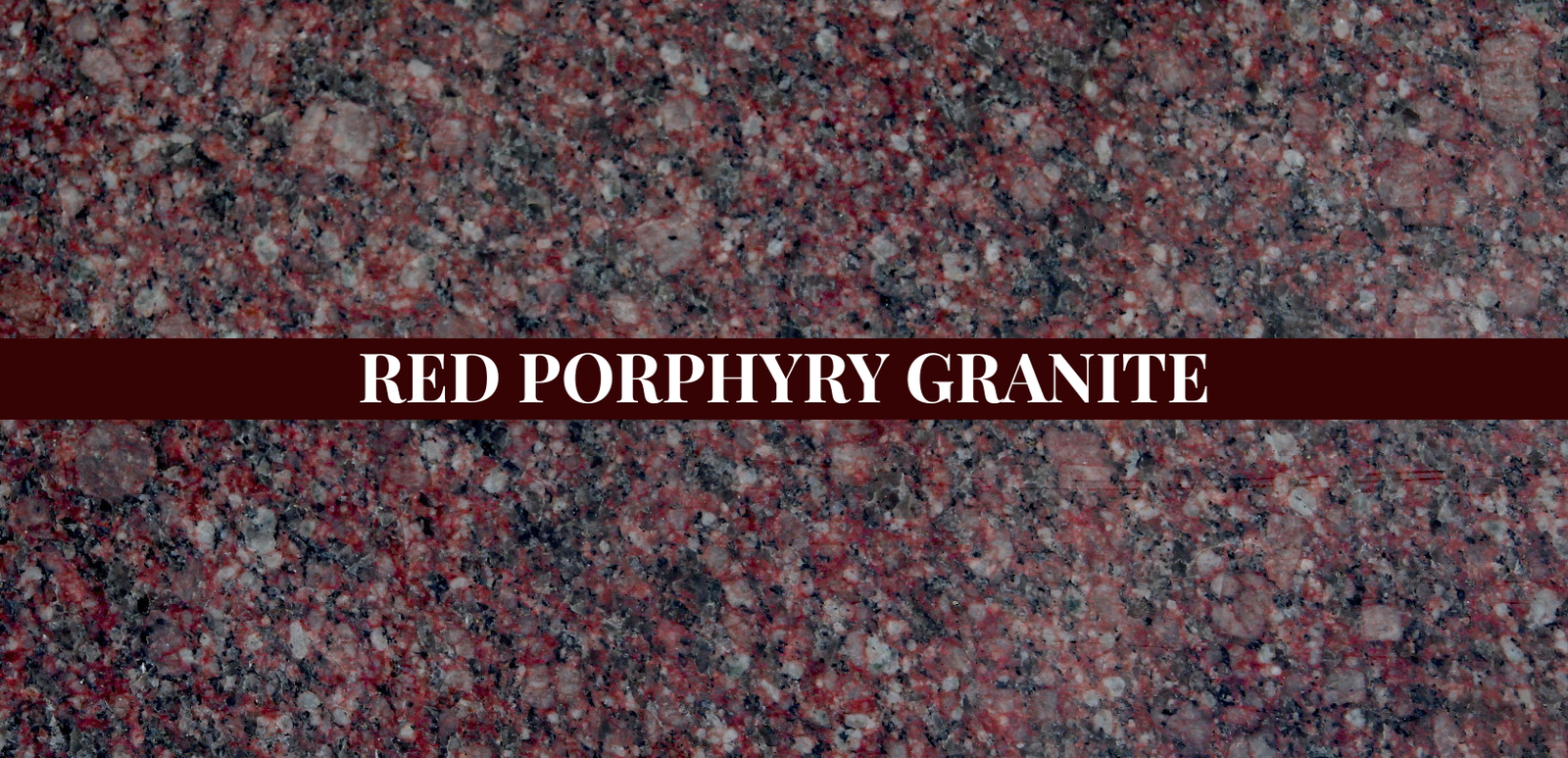
Red porphyry granite is one of the most distinctive natural stones found in the world of architecture and geology. Its deep red color, mixed crystalline texture, and remarkable durability have made it a material used for centuries in roads, buildings, monuments, and public spaces. Although it is often grouped under the commercial name “granite,” red porphyry is technically a porphyritic igneous rock formed through a unique geological process that gives it both strength and beauty.
This stone carries a long story that connects Earth’s volcanic past with human civilization. From ancient imperial structures to modern urban design, red porphyry granite has remained a symbol of permanence, strength, and natural elegance.
Natural Identity and Formation
Red porphyry granite is formed deep within the Earth through volcanic and sub-volcanic activity. It begins its journey as molten magma, slowly cooling beneath the surface. During this slow cooling stage, large mineral crystals such as feldspar and quartz begin to form. Later, when the remaining magma cools more quickly, it creates a fine-grained background that surrounds these large crystals.
This two-stage cooling process is what creates the stone’s characteristic porphyritic texture. The larger crystals appear embedded in a compact red or reddish-brown base, giving the stone its unique spotted appearance.
The red coloration comes primarily from iron-rich minerals that oxidize during formation. Over millions of years, these natural chemical reactions produce shades ranging from deep burgundy to rusty crimson. Each deposit of red porphyry granite has its own variation depending on local mineral content and geological conditions.
Geological Age and Earth Connection
When we talk about the “age” of red porphyry granite, we are referring to geological time rather than human time. This stone is believed to have formed millions of years ago, during periods of intense volcanic activity in Earth’s crust.
It belongs to a broader family of igneous rocks, which are formed from cooled magma or lava. Within this family, it shares relationships with granite, rhyolite, and diorite, although its texture and formation process make it distinct.
In a symbolic sense, its “family” can be described as part of Earth’s volcanic heritage, shaped by deep underground forces that existed long before human civilization began.
Physical Characteristics and Appearance
The appearance of red porphyry granite is one of its most defining features. It is instantly recognizable due to its rich red tone combined with scattered mineral crystals. These crystals are often lighter in color, creating a natural contrast that enhances the stone’s visual depth.
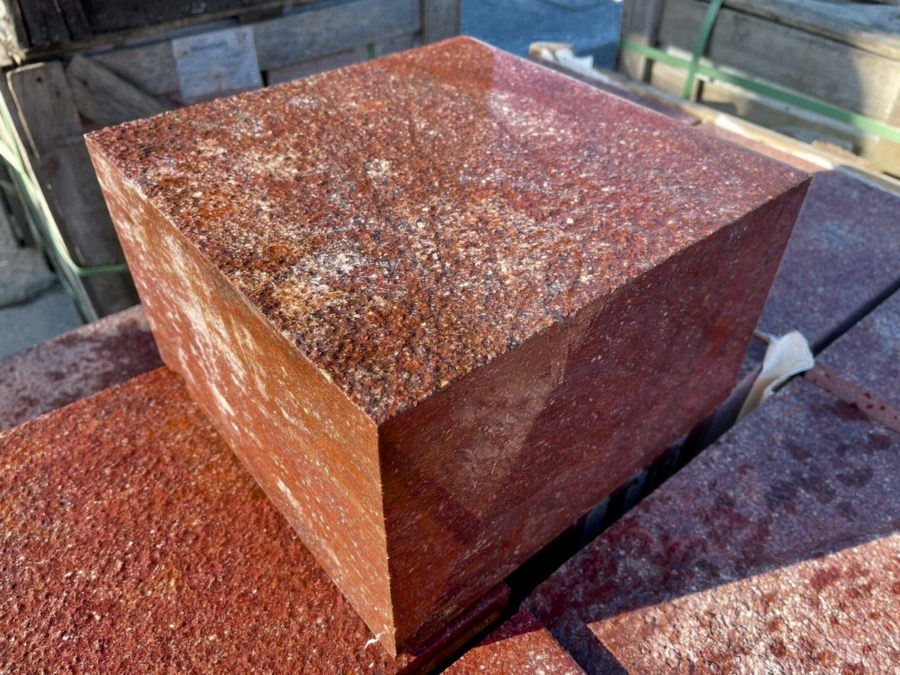
The surface of the stone is generally rough in its natural state but can be cut, polished, or flamed depending on its intended use. When processed, it can achieve either a smooth architectural finish or a textured anti-slip surface.
One of its strongest physical qualities is its density. It is a heavy, compact stone with high compressive strength, meaning it can withstand significant pressure without breaking. It is also highly resistant to weathering, making it suitable for outdoor environments exposed to rain, heat, frost, and heavy use.
Strength and Practical Performance
Red porphyry granite is valued in construction not only for its appearance but also for its performance. It has extremely low water absorption, which prevents damage from moisture or freezing conditions. Its hardness makes it resistant to scratching and erosion, while its natural composition allows it to last for decades or even centuries without losing structural integrity.
Because of its textured surface, it also provides excellent slip resistance. This makes it especially useful for public walkways, streets, and plazas where safety is important.
Unlike synthetic materials, it does not require chemical treatment to maintain its strength. Basic cleaning is usually enough to preserve its appearance, even after years of exposure.
Historical Importance in Civilizations
Red porphyry granite has a rich and fascinating historical background. One of its earliest known sources was in ancient Egypt, where it was extracted from desert regions and used in high-value architectural projects.
The stone later gained immense importance in the Roman Empire. In Roman culture, porphyry was considered a symbol of imperial power. Its deep red color was associated with royalty, authority, and prestige. Because of its rarity and difficulty in quarrying, it was reserved for emperors and elite constructions.
Roman architects used red porphyry in columns, sculptures, sarcophagi, and ceremonial structures. Some of these artifacts still exist today, preserved in museums and archaeological sites, demonstrating the durability of the stone across thousands of years.
This historical legacy has contributed to the stone’s reputation as a “stone of emperors,” representing strength, permanence, and authority.
Modern Architectural Applications
In modern construction, red porphyry granite continues to be widely used across the world. Its durability and natural beauty make it suitable for both functional and decorative applications.
It is commonly used in street paving, especially in European cities where historic preservation is important. Many old town centers still feature porphyry cobblestones that have remained intact for centuries. Its use in public squares and pedestrian zones is also widespread due to its anti-slip properties and resistance to heavy foot traffic.
In addition to paving, it is used in building facades, landscaping projects, garden pathways, and architectural cladding. Designers often choose it when they want to combine natural aesthetics with long-term durability.
Its earthy red tones also allow it to blend well with both modern architecture and historical structures, making it a versatile material for urban design.
Global Distribution and Quarrying
Red porphyry granite is found in several regions of the world, including China, Italy, Egypt, and parts of Eastern Europe. Each region produces slightly different variations in color and texture due to differences in mineral composition and geological conditions.
Italian porphyry is especially well known for its consistency and quality, making it highly sought after in international construction markets. Chinese deposits are also widely used due to large-scale production capabilities.
Quarrying of the stone involves cutting large blocks from natural rock formations. These blocks are then processed into slabs, tiles, or paving stones depending on their intended use. Modern quarrying practices are increasingly regulated to minimize environmental impact and ensure sustainable extraction.
Maintenance and Longevity
One of the reasons red porphyry granite remains so popular is its long lifespan. Once installed, it requires very little maintenance compared to other building materials.
Over time, the stone may develop a natural patina due to exposure to weather and use. This aging process is often considered aesthetically pleasing, as it enhances the stone’s natural character rather than diminishing it.
Routine cleaning with water is usually enough to maintain its surface. Unlike artificial materials, it does not fade or weaken easily, making it a cost-effective long-term investment for infrastructure projects.
Symbolic Profile in Geological Terms
Although red porphyry granite is not a living organism, it can be described in symbolic profile terms to better understand its nature.
In geological time, its “age” extends over millions of years, shaped by ancient volcanic forces. It belongs to the igneous rock family, closely connected to other volcanic and plutonic formations.
It has no physical height or biological attributes such as lifestyle or social behavior. However, in a metaphorical sense, its “life” exists within the Earth’s crust, where it remains until it is extracted through quarrying.
Its appearance is defined by deep red coloration and crystalline patterns, giving it a unique identity among natural stones. It does not have a net worth in human terms, but it holds significant economic value in construction industries worldwide.
Why It Is Often Called Granite
Even though red porphyry is not technically true granite in geological classification, it is commonly labeled as granite in commercial trade. This is because it shares similar properties such as hardness, durability, and workability.
In the stone industry, the term “granite” is often used broadly to describe any strong, crystalline igneous rock suitable for construction. This practical naming convention helps simplify classification for buyers and architects.
Environmental and Sustainable Value
Modern use of red porphyry granite also takes sustainability into account. Natural stone is considered an environmentally responsible material due to its long lifespan and recyclability.
Many quarries now follow strict environmental regulations that include land restoration, controlled extraction, and reduced energy consumption during processing. Because the stone lasts for decades, it reduces the need for frequent replacement, which helps lower environmental impact over time.
Cultural and Design Significance
Beyond its physical strength, red porphyry granite carries strong cultural and aesthetic meaning. Its association with ancient civilizations gives it a timeless identity that modern architects still value.
It is often used in spaces designed to express permanence, tradition, and natural beauty. Its warm red tones bring visual depth to urban environments and create a connection between natural geology and human design.
Conclusion
Red porphyry granite is far more than just a construction material. It is a geological creation shaped by ancient volcanic forces, a historical symbol of power and royalty, and a modern architectural resource valued for its durability and beauty.
From Roman imperial monuments to today’s city streets, it continues to serve as a bridge between Earth’s deep history and human creativity. Its strength, texture, and color ensure that it remains one of the most respected natural stones in the world of architecture and design.
FAQs
Q: What is red porphyry granite?
A: It is a hard igneous rock with red color and visible crystal patterns, commonly used in construction and paving.
Q: Is red porphyry granite actually granite?
A: Not exactly. It is a porphyritic rock but often called granite in the stone industry due to similar strength and appearance.
Q: How old is red porphyry granite?
A: It formed millions of years ago through volcanic activity deep within the Earth’s crust.
Q: What is red porphyry granite used for?
A: It is used for roads, pavements, building facades, landscaping, and public squares.
Q: Why is red porphyry granite so strong?
A: Because it has a dense crystalline structure formed under intense heat and pressure underground.
